Welcome to Weidong Machines
The Role of Mobile Wood Grinders in Large-Scale Biomass Recycling Projects?
Large biomass sites often lose money on hauling bulky waste and slow size reduction. I have seen mobile wood grinders solve both problems right at the source.
Mobile wood grinders play a key role in large-scale biomass recycling because they cut transport volume, process mixed raw materials on site, and keep feedstock moving for fuel, compost, and industrial reuse. High-capacity tub grinders like WD3600C and WD3600T are built for this job.
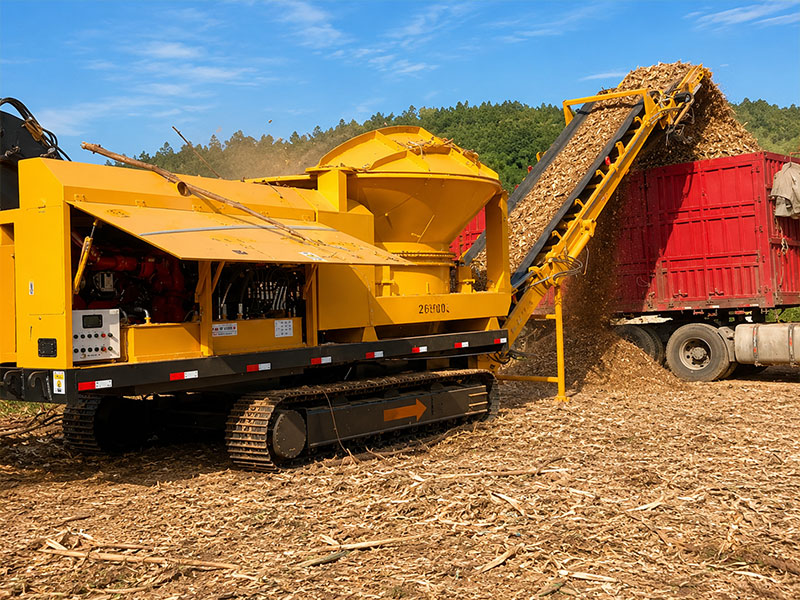
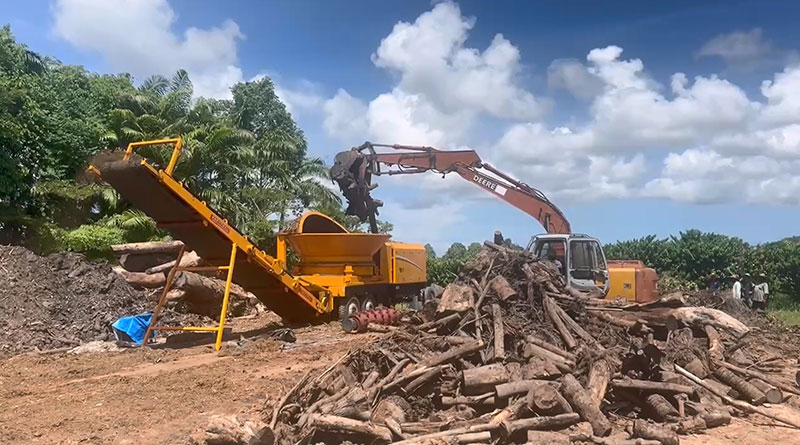
In my work with biomass and shredding projects, I have learned one simple fact. Big recycling jobs fail when material flow slows down. A mobile grinder changes that. It brings size reduction to the pile, not the other way around. That means less rehandling, less transport waste, and better control over the whole line.
The Evolution of Biomass Recycling: Why Mobile Wood Grinders Are Essential?
In the past, many biomass projects relied on fixed crushing points and too much material handling. I have seen that create cost, dust, and delays very fast.
Mobile wood grinders are now essential because biomass recycling has moved toward on-site processing, faster cleanup, and direct feedstock preparation for energy and reuse. Their mobility and simple operation make them fit changing field conditions well.
When I first started working around heavy material reduction equipment, many operators still treated biomass as a transport problem first and a processing problem second. That approach usually raised costs. Loose roots, branches, bark, and straw take up huge space before grinding. So every extra loading step means more fuel, more labor, and more delay. Mobile wood grinders changed this logic. They made it possible to crush close to the source and turn waste into a usable product much faster.
I also see a wider change in the market. Biomass recycling is no longer only about basic waste disposal. It now supports green waste treatment, site cleaning, disaster cleanup, municipal demolition, bark recycling, and agricultural straw recovery. In power generation projects, crushed biomass becomes a usable renewable fuel, especially for straw power plants and raw material power plants. That is why mobility matters so much. A grinder that can go where the material is can serve more jobs in less time.
| Recycling stage | Old approach | Mobile grinder approach |
|---|---|---|
| Material collection | Move bulky waste long distance | Process near the source |
| Site cleanup | Slow and labor heavy | Faster and more direct |
| Feedstock preparation | Delayed by transport and stockpiling | Immediate size reduction |
| End use | Waste disposal focus | Fuel, reuse, and regeneration focus |
From my point of view, mobile grinding is not just an equipment upgrade. It is a shift in how large biomass projects are planned and run.
Key Technical Advantages of High-Capacity Mobile Tub Grinders?
A large project can look efficient on paper and still fail in the yard if the grinder cannot feed, cut, and run steadily. I have seen that gap many times.
High-capacity mobile tub grinders stand out because they combine large feed openings, strong engine power, high throughput, and application-specific rotor setups. Models WD3600C and WD3600T both deliver 25 to 40 tons per hour with 408 kW power.
When I evaluate a tub grinder for industrial biomass work, I first look at three things. I look at feed size, power, and throughput. If those three are weak, the rest does not matter much. The WD3600C crawler type tub grinder and the WD3600T trailer type tub grinder both use a large 3600 mm tub inlet, a 2350 mm cutting hole, and a 408 kW engine. Their rated capacity is 25 to 40 tons per hour, which puts them in the right class for demanding biomass projects.
Then I look at the cutting system. The WD3600T uses a 2200 mm × 670 mm cutting roll, 10 sets of cutters, and a spindle speed of 850 rpm. This kind of setup helps maintain stable material reduction when feedstock is irregular and bulky. I also like that the machine can be matched with different roller assemblies for different feed types. The knife roller assembly is suitable for tree roots, branches, bark, and straw, while the hammer roller assembly is better for templates, demolition materials, and similar biomass raw materials. That flexibility matters a lot in real yards, where feedstock is rarely uniform.
| Technical point | WD3600C | WD3600T | Why it matters |
|---|---|---|---|
| Model | WD3600C | WD3600T | Clear machine selection by mobility need |
| Capacity | 25–40 T/h | 25–40 T/h | Supports large projects |
| Engine power | 408 kW | 408 kW | Maintains cutting force |
| Inlet size | Ø3600 mm | Ø3600 mm | Accepts bulky material |
| Spindle speed | 850 rpm | 850 rpm | Stable grinding action |
In my experience, these are not just brochure numbers. They directly affect daily output, loader rhythm, and fuel efficiency on site.
Versatility in Action: Processing Diverse Biomass Raw Materials?
Many projects do not deal with one clean material stream. They deal with mixed piles. That is where weak grinders struggle and downtime starts.
Mobile tub grinders are effective because they can process many biomass raw materials, including tree roots, branches, bark, straw, templates, and demolition wood. Different roller assemblies expand this range and improve fit for each feedstock type.
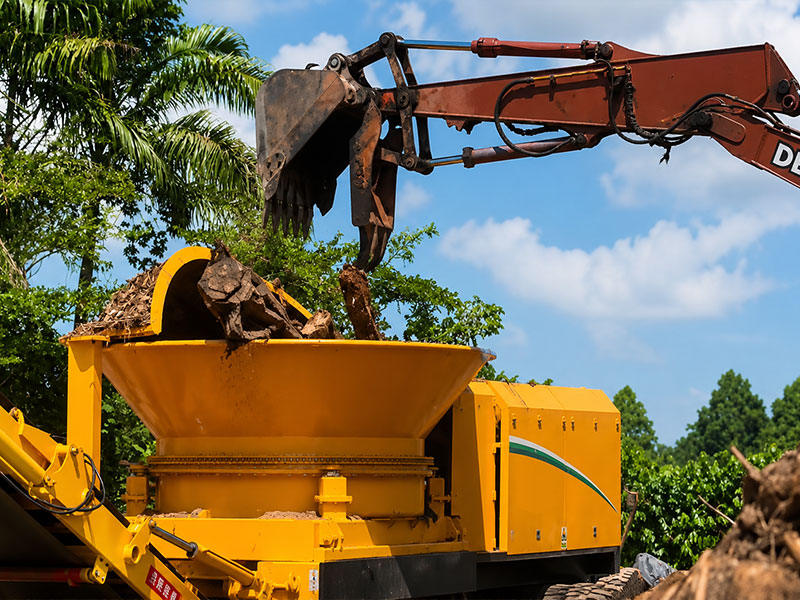
In the field, material variety is normal. One day I may see orchard roots and storm branches. The next day I may see bark, straw, wood templates, or demolition residue. A grinder used in large biomass recycling must handle this range without becoming too slow or too delicate. The reference data shows that the knife roller assembly is suitable for tree roots, branches, bark, and straw. It also shows that the hammer roller assembly is suitable for templates, demolition materials, bark, and related biomass raw materials. This is a practical advantage, not just a technical one.
This kind of versatility helps contractors and plant managers use one machine across more job types. It also reduces the need to dedicate separate machines to every material category. In my own work, I have found that this is one of the biggest drivers of return on investment. A grinder that only works well on clean wood limits your schedule. A grinder that can shift between green waste, agricultural residue, and demolition-related biomass opens more revenue paths.
| Raw material | Suitable assembly | Common project type |
|---|---|---|
| Tree roots | Knife roller | Land clearing |
| Branches | Knife roller | Forestry and orchard cleanup |
| Bark | Knife or hammer roller | Sawmill and biomass fuel |
| Straw | Knife roller | Agricultural residue recycling |
| Templates | Hammer roller | Construction waste recovery |
| Demolition materials | Hammer roller | Municipal and site cleanup |
From what I have seen, versatility is one of the strongest reasons mobile tub grinders remain central in modern biomass recycling.
Operational Mobility: Choosing Between Crawler and Trailer Configurations?
A grinder may have enough power, but the wrong chassis can still hurt the whole project. I always tell clients that mobility should match the job pattern.
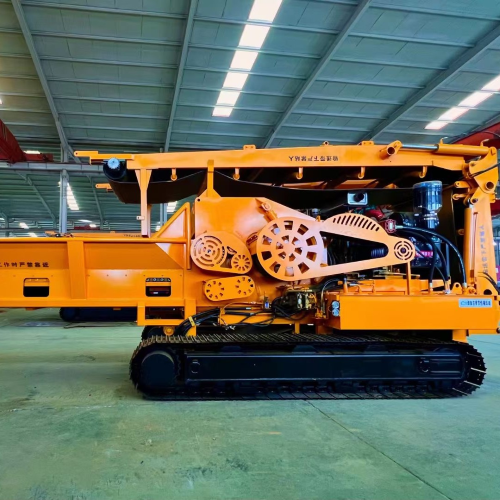
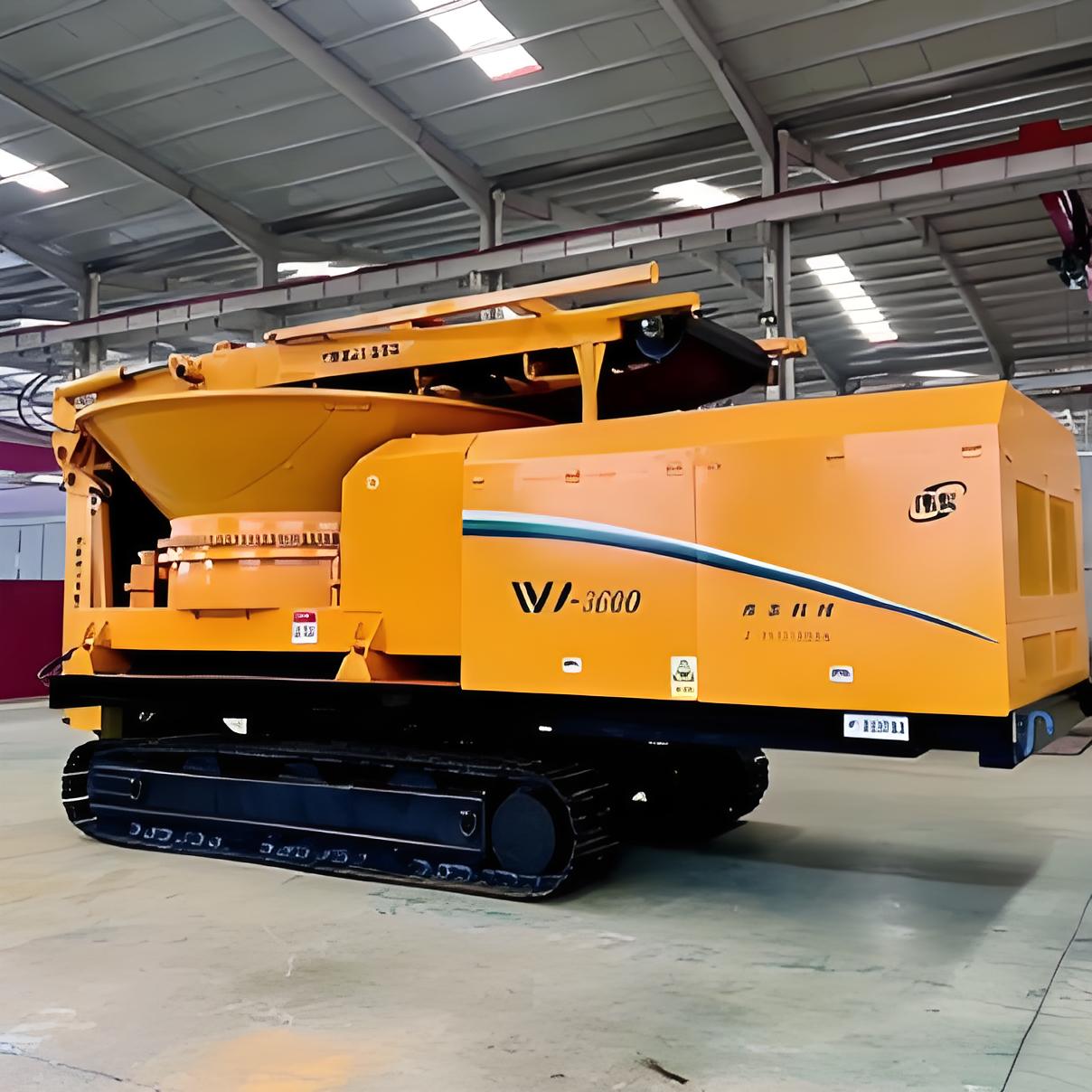
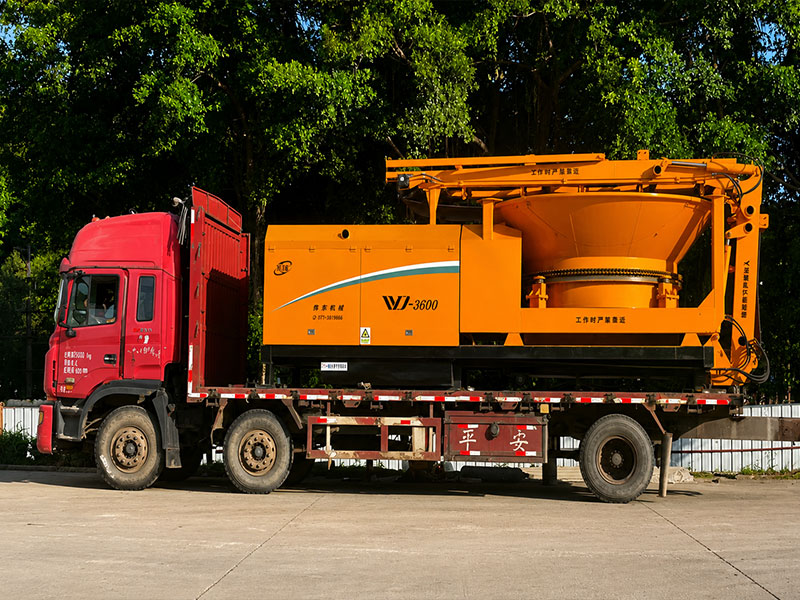
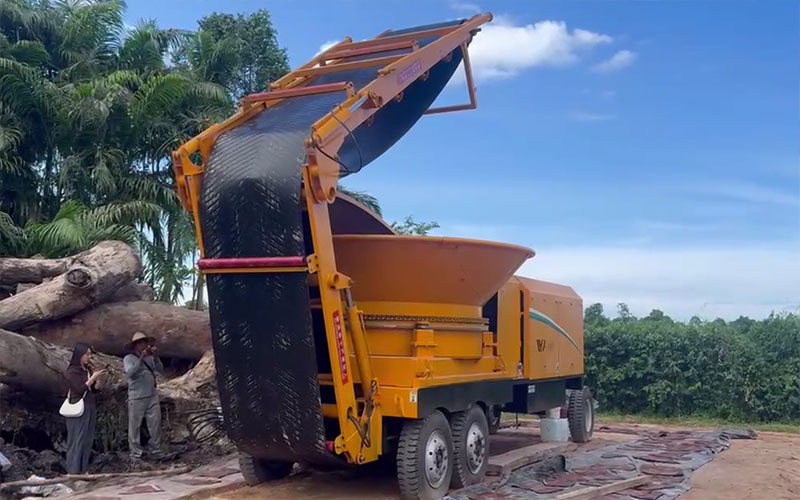
Crawler and trailer configurations serve different needs. The WD3600C crawler type suits sites with frequent movement and offers a remote-control self-propelled chassis option, while the WD3600T trailer type is better for short-distance towing and semi-trailer transport needs.
I usually break this decision into one basic question. How often will the grinder move, and on what kind of site? If the machine needs to change position often inside a large yard, land clearing zone, or rough biomass stock area, a crawler unit makes more sense. The WD3600C offers a remote control self-propelled crawler chassis 3600 series option for sites that need frequent movement. That can save time and reduce the need for support vehicles during repositioning.
On the other hand, some projects are more road-linked or plant-linked. They may need short-distance towing between work zones or a format closer to transport rules. The WD3600T uses a standard trailer type and can be towed by forklift for short-distance movement. It also has a standard semi-trailer double towed type that can apply for a vehicle license. I find this useful for contractors serving several nearby sites or industrial users who shift the grinder between storage and processing areas.
| Configuration | Model | Best use case | Main mobility feature |
|---|---|---|---|
| Crawler type | WD3600C | Frequent on-site movement | Remote-control self-propelled crawler option |
| Trailer type | WD3600T | Short-distance towing and transport planning | Forklift towing and semi-trailer format |
In my experience, the better choice is not the more advanced chassis. It is the chassis that fits the movement pattern of the project.
Maximizing Efficiency in Large-Scale Industrial Operations?
Big projects do not win on one machine spec alone. They win on flow. I have seen even strong machines lose value when the system around them is not planned well.
To maximize efficiency, operators should match grinder capacity to material supply, reduce unnecessary handling, select the right rotor setup, and use mobile positioning to keep feedstock moving. Machines rated at 25 to 40 T/h support this high-throughput approach well.
In large-scale operations, efficiency starts before the grinder begins to cut. I always look at stockpile layout, loader path, discharge direction, and final product destination. A mobile tub grinder helps because it can be placed closer to incoming biomass. That shortens loader cycles and reduces double handling. When the grinder can process 25 to 40 tons per hour, as the WD3600C and WD3600T can, the rest of the site must be organized to support that rate.
I also pay attention to fuel and uptime. The listed fuel consumption rate of 20 to 40 L/H gives a practical operating range for planning daily production cost. If the machine is constantly waiting for feed or blocked by poor pile management, that fuel is not buying useful output. I have also found that matching the roller assembly to the raw material improves cut quality and reduces unnecessary wear. In green waste treatment, site cleaning, disaster cleaning, municipal demolition, and straw recovery fields, this planning directly affects profit and schedule reliability.
| Efficiency factor | Why it matters | Practical action |
|---|---|---|
| Machine placement | Cuts loader travel time | Grind near the pile |
| Correct chassis choice | Reduces move delays | Match crawler or trailer to site pattern |
| Correct roller assembly | Improves output and wear life | Use knife or hammer setup by material |
| Capacity matching | Prevents bottlenecks | Feed consistently to 25–40 T/h class |
| Fuel planning | Controls operating cost | Track output against 20–40 L/H use |
For me, the highest efficiency always comes from treating the grinder as the center of a moving process, not as a stand-alone machine.
Ease of Maintenance and Remote Operational Capabilities?
A powerful machine is only useful if crews can keep it running. In my experience, maintenance access and easy movement often decide real uptime.
Mobile wood grinders improve uptime when they are easy to clean, easy to service, and simple to reposition. The workbench can turn 90 degrees for material cleanup and maintenance, and the crawler version offers remote-control movement for frequent relocation.
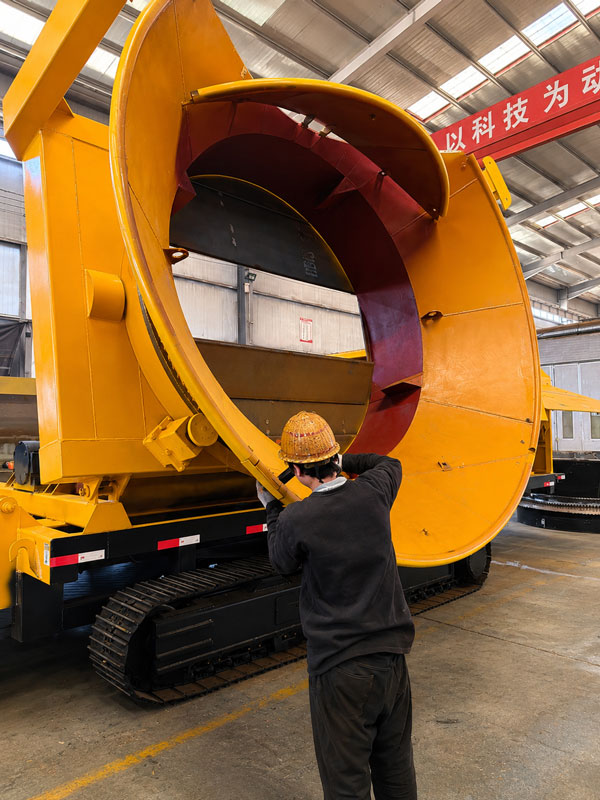
I have spent enough time around heavy equipment to know that maintenance convenience is not a small detail. It is one of the biggest uptime factors. If operators cannot clean out trapped material fast, service points are hard to access, or movement takes too many steps, the machine loses working hours every week. The reference material notes that the workbench can be turned over at 90 degrees for cleaning up materials, which is convenient for maintenance. I consider that a very practical feature for field use, especially in sticky bark, fibrous roots, and mixed biomass conditions.
Remote operational movement also matters. On sites where the machine needs to move often, the remote-control self-propelled crawler chassis option on the WD3600C can reduce repositioning effort and improve site safety. I have seen this kind of feature save time during pile changes and work-zone shifts. It also helps when the yard is uneven or crowded with support equipment.
| Maintenance or control feature | Benefit |
|---|---|
| 90-degree turnover workbench | Easier cleaning and service access |
| Remote-control crawler movement | Faster repositioning on active sites |
| Mobile machine layout | Simpler adaptation to changing work zones |
For large biomass recycling projects, I always see maintenance and control as production tools. If they are done well, output stays steady. If they are ignored, capacity numbers do not mean much.
Conclusion
I believe mobile wood grinders are now core equipment in biomass recycling because they combine capacity, material flexibility, mobility, and practical uptime support in one working platform.