Welcome to Weidong Machines
Trailer-Type vs. Crawler-Type Tub Grinders: Which One Fits Your Work Site Needs?
If I choose the wrong mobile grinder, I do not just lose money. I lose time, fuel, labor, and production every single day.
Trailer-type and crawler-type tub grinders can deliver similar grinding output, but they fit different job sites. I usually suggest a trailer-mounted unit for flatter yards and planned movement, and a crawler-mounted unit for rough ground, frequent repositioning, and harder site access.
In my work, I often see buyers focus first on capacity. I understand that. Output matters. But on real job sites, mobility, terrain, maintenance access, and raw material flow often decide whether a machine truly performs well or becomes a daily problem. That is why I always compare trailer-type and crawler-type tub grinders from the view of the whole work site, not just one data sheet.
Understanding the Core Differences: Trailer-Type vs. Crawler-Type Tub Grinders?
Many buyers think both machines are almost the same. Then they put the wrong chassis into the wrong yard and face endless handling trouble.
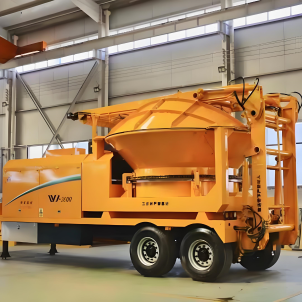
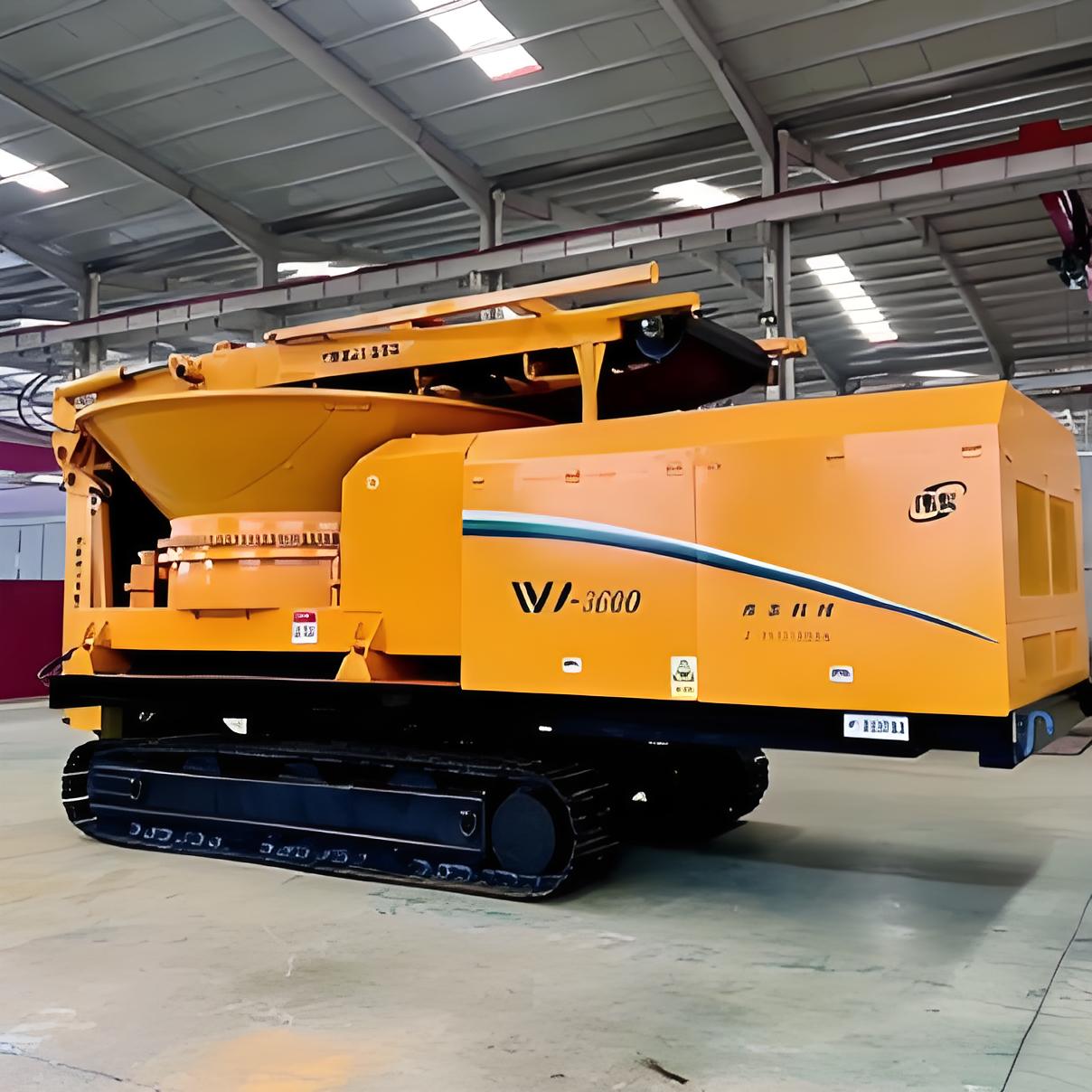
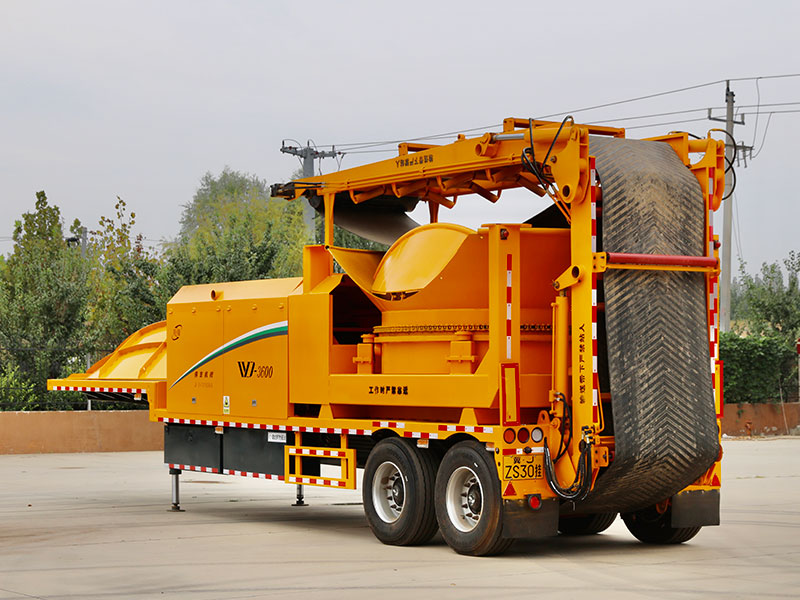
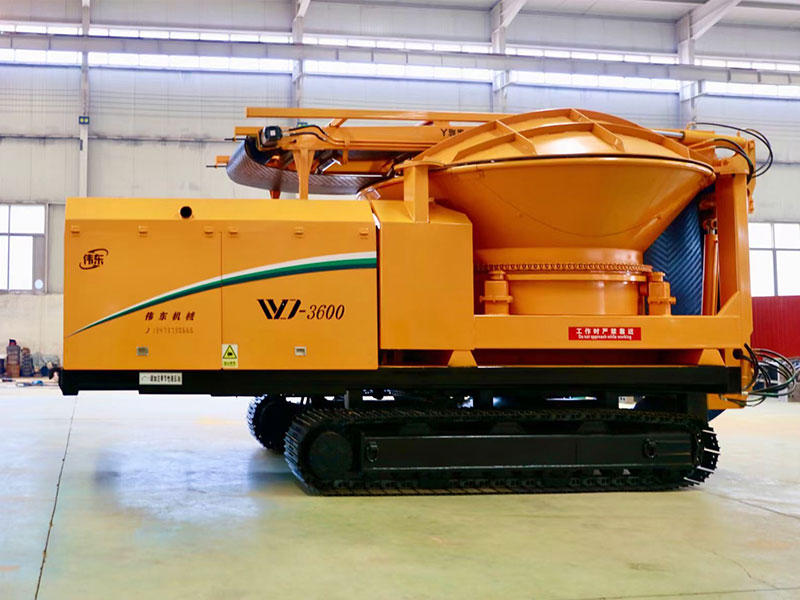
The core difference is the undercarriage and movement method. The WD3600T is a trailer-type tub grinder built for towing and short-distance yard movement, while the WD3600C uses a self-propelled crawler chassis option for frequent movement and better off-road job site travel.
When I explain this to clients, I start with the product models. The trailer-type model in the reference is the WD3600T. The crawler-type model is the WD3600C.Both are large tub grinders built for bulk wood and biomass handling. Both have the same inlet size of Ø3600 mm, the same cutting hole size of Ø2350 mm, the same spindle working speed of 850 rpm, the same engine power of 408 kW, and the same capacity range of 25 to 40 tons per hour.So if I look only at grinding power, they are very close.
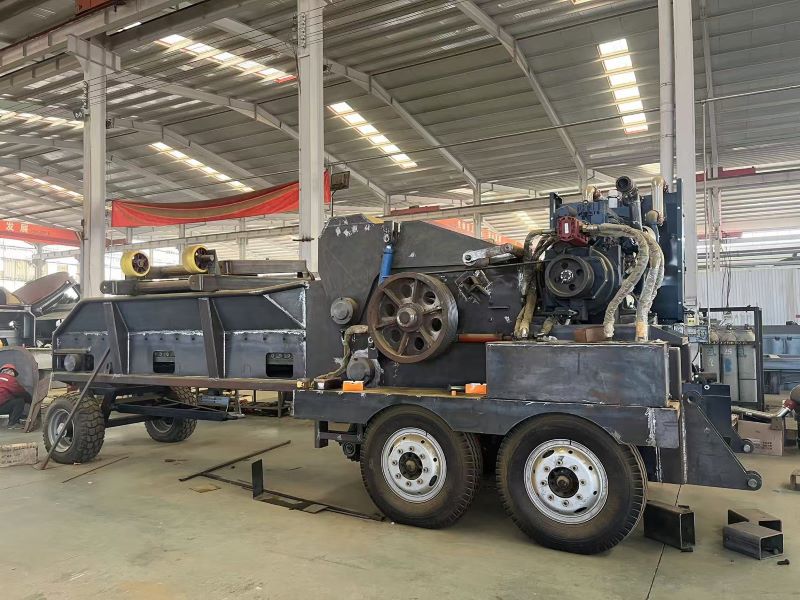
The real split is in how they move and where they work best. The WD3600T is a standard trailer type. It can be towed by forklift for short-distance movement. It also has a semi-trailer double-towed version, and the upgraded semi-trailer can meet licensing conditions in some cases.That makes it a practical choice for plants with fixed work areas, internal roads, and planned logistics.
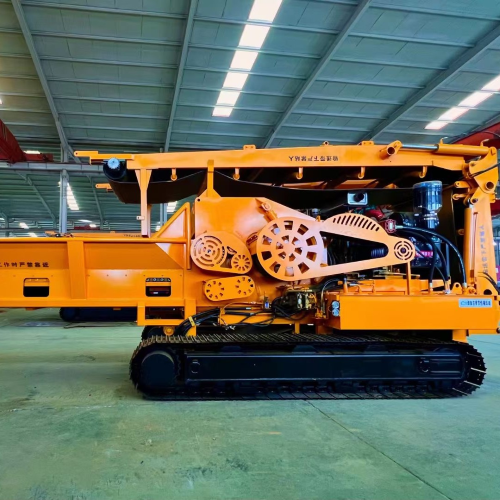
The WD3600C, by contrast, is linked with a remote-control self-propelled crawler chassis 3600 series option for yards where the machine needs to move often.In simple words, the crawler version is made for a site that is less organized, less even, and more demanding.
| Item | Trailer-Type WD3600T | Crawler-Type WD3600C |
|---|---|---|
| Movement style | Towed or semi-trailer movement by forklift/tractor support | Self-propelled crawler movement with remote control option |
| Best site type | Fixed yards, flatter ground, planned routes | Uneven ground, wide yards, frequent repositioning |
| Weight | 17T | 21T |
| Capacity | 25–40T/h | 25–40T/h |
Performance and Capacity: Do Mobile Limitations Affect Throughput?
Many people worry that a mobile chassis will cut production. That is a fair concern, but the answer is not always yes.
In the reference models, trailer and crawler tub grinders share the same rated capacity of 25 to 40 tons per hour and the same 408 kW engine power. That means movement design does not automatically reduce throughput on paper.
I have learned that rated throughput and real throughput are not always the same thing. The data shows the WD3600T and WD3600C both reach 25 to 40 tons per hour with 408 kW of engine power. So if I compare only the rotor system and drive power, I cannot say that crawler mobility itself lowers output.
Still, on site, throughput depends on more than horsepower. It depends on how fast material gets to the tub. It depends on how often the machine must stop and move. It depends on whether loaders spend extra time chasing the grinder or waiting for it. On a flat yard with stable feeding, a trailer-type machine can perform just as well as a crawler unit because the machine can stay in one well-designed processing zone.
But on a rough or spread-out site, a crawler grinder may protect real throughput better. That is because it can reposition closer to stockpiles, storm debris, root piles, or changing feed points. In my experience, every extra loader cycle adds hidden cost. Every delay cuts actual daily output. So the better question is not “Which machine has the bigger number?” The better question is “Which machine keeps the material flowing on my site?”
| Throughput factor | Trailer-Type impact | Crawler-Type impact |
|---|---|---|
| Rated capacity | Same 25–40T/h | Same 25–40T/h |
| Engine power | 408 kW | 408 kW |
| Best feeding condition | Centralized feeding zone | Distributed or shifting feeding zone |
| Real output risk | More affected by relocation delays | Less affected when site changes often |
Evaluating Mobility Requirements: When to Choose a Trailer-Mounted System?
Some buyers pay extra for crawler travel when they do not really need it. That money could go into loaders, screens, knives, or fuel budget instead.
I choose a trailer-mounted tub grinder when the yard is stable, movement is short-distance, and transport planning is clear. The WD3600T is designed for towing, forklift-assisted movement, and semi-trailer use, which suits organized processing yards.
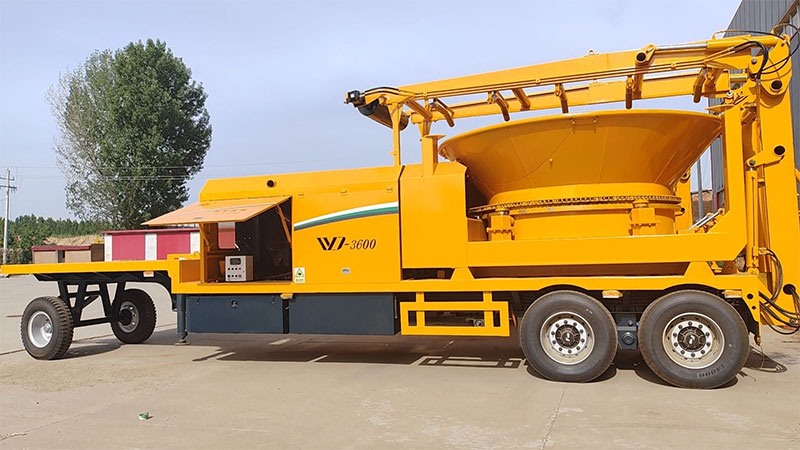
I often recommend the WD3600T to clients with a fixed biomass plant, wood recycling station, or industrial yard where the machine works in one main place for long periods. This model is 11000 × 2550 × 4000 mm and weighs 17T. That lower machine weight, compared with the crawler model’s 21T, can help when the goal is simpler structure and easier planned movement.
The reference says the WD3600T is suitable for short-distance movement and can be towed by forklift. It also mentions a standard semi-trailer double towed type and an upgraded semi-trailer that can apply for a vehicle license in some cases. For me, that tells a very clear story. This machine is for operators who want mobility, but not full self-propelled field travel.
I would choose trailer-type when:
the ground is firm and level,
the feedstock piles are close,
internal transport tools are available,
the machine does not need to move many times each shift,
and the business wants a lower-complexity movement system.
This setup is often good for roots, branches, and straw that are collected into one processing area. It can also fit facilities that schedule grinding in batches and then send output to panel plants, biomass fuel plants, or pellet production chains.
Navigating Rough Terrain: The Advantages of Crawler-Mounted Tub Grinders?
A powerful grinder can still become useless if it cannot reach the material safely. I have seen this problem many times in wet yards and uneven land.
A crawler-mounted tub grinder is the better choice when the work site is rough, movement is frequent, and material piles are spread out. The WD3600C offers a remote-control self-propelled crawler chassis option for these demanding job conditions.
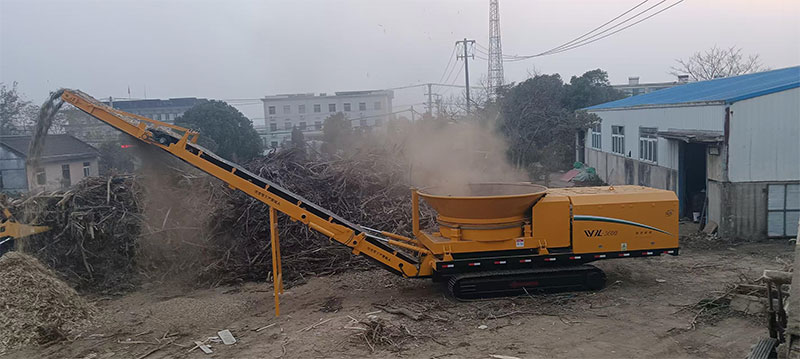
The WD3600C is built for operators who need more than raw grinding power. They need site access. Its machine size is 7500 × 2600 × 3500 mm, and its weight is 21T. The reference points out that when the work yard needs the machine to move frequently, a remote-control self-propelled crawler chassis 3600 series is available. That is one of the biggest practical differences in this comparison.
I see crawler machines work well in forestry residue yards, storm cleanup points, plantation field edges, and temporary biomass handling areas. These are places where surfaces are often soft, uneven, muddy, or broken. In those places, towing a trailer unit again and again can slow the whole operation. A crawler unit can move closer to the stockpile, reduce loader travel, and keep the workflow tighter.
This does not mean crawler is always better. It means crawler is better when terrain and relocation are the real bottlenecks. If your pain point is not horsepower but access, then the crawler type solves the right problem.
| Rough-terrain need | Why crawler helps |
|---|---|
| Frequent repositioning | Self-propelled travel cuts relocation delay |
| Uneven ground | Better suited to harsh site movement conditions |
| Spread-out feedstock | Can move closer to material piles |
| Hard-to-reach work areas | Remote control improves movement convenience |
Operational Flexibility and Maintenance: Key Design Features to Consider?
Many buyers ask me about output first. Smart buyers ask me what happens on the worst maintenance day. That is where design quality shows itself.
Both systems offer practical maintenance help because the workbench can be turned over 90 degrees for cleaning. The machine can also be matched with different roller assemblies, which improves flexibility for different biomass materials.
I always tell clients that maintenance access is not a side issue. It is part of production. The reference states that the workbench can be turned over at 90 degrees for cleaning up materials, and that this is convenient for maintenance. That matters a lot in tub grinders because fibrous biomass, bark, moist residues, and mixed green waste can build up around working zones.
Another useful point is material flexibility. The reference says the knife roller assembly is suitable for tree roots, branches, bark, and straw. It also says the hammer roller assembly is suitable for biomass raw materials such as templates, demolition materials, and bark.This gives me a simple decision path. If the client handles cleaner green biomass, a knife roller setup may be the better fit. If the feed is dirtier, more mixed, or more demolition-like, the hammer setup may offer better tolerance.
This flexibility can matter just as much as chassis type. A wrong roller assembly can hurt wear cost and finished product quality even if the mobility choice is correct.
| Design feature | Value on site |
|---|---|
| 90-degree turnover workbench | Easier cleanout and maintenance |
| Knife roller assembly | Good for roots, branches, bark, straw |
| Hammer roller assembly | Good for templates, demolition materials, bark |
| Chassis choice | Matches movement style to site conditions |
Application Scenarios: Matching Machine Specs with Your Biomass Raw Materials?
A machine should match the raw material, not just the budget. If the feed changes, the best grinder choice can change too.
Both WD3600T and WD3600C handle biomass such as tree roots, branches, and straw. The right version depends on where those materials are processed and whether the site is fixed or rugged.
The references list key raw materials for these tub grinders. Both models are presented for tree roots, branches, straw, and similar bulk biomass. The crawler model also notes knife and hammer roller assemblies for different feed types, including bark, templates, and demolition materials. That tells me the platform is not limited to one narrow feed category.
In practice, I would match them like this:
Trailer-type WD3600T: best for centralized yard processing of roots, branches, and straw where material is brought into one stable feeding area.
Crawler-type WD3600C: best for field-side or rough-site biomass work where roots, branches, bark, and loose residues are spread across uneven ground.
Hammer assembly use: better when the feed is mixed, rough, or includes demolition-related wood fractions.
Knife assembly use: better when the feed is more natural biomass and the user wants a cleaner cutting action.
The end-use side also matters. Processed wood raw materials can be suitable for wood-based panel factories, biomass power plants, and pellet factories. So I do not only look at the input. I also look at the downstream buyer.
Cost-Benefit Analysis: Making the Right Investment for Your Wood Processing Business?
The cheapest machine to buy is not always the cheapest machine to run. I have seen that lesson cost companies far too much.
The right investment depends on hidden site costs. Trailer-type units may save upfront complexity for fixed yards, while crawler-type units can save labor, time, and handling cost on rough sites through easier repositioning.
When I help clients compare investment value, I break the decision into direct cost and hidden cost. The direct cost includes the machine itself, transport setup, and support equipment. The hidden cost includes relocation time, loader fuel, idle workers, site delays, and wear caused by poor workflow.
The WD3600T often wins when the site is organized and movement is limited. In that case, there is no need to pay for crawler travel if the machine will mostly stay in one work zone. The trailer design is simple and practical for internal towing and semi-trailer logistics.
The WD3600C often wins when poor terrain causes daily delay. If a crawler chassis lets the grinder move faster, stay closer to the feed pile, and avoid repeated towing arrangements, the higher mobility can pay back through smoother operation. In my experience, this is where buyers either save money or waste money for years.
| Investment factor | Trailer-Type WD3600T | Crawler-Type WD3600C |
|---|---|---|
| Best ROI case | Fixed plant or organized yard | Rough, changing, spread-out work site |
| Handling support needed | Forklift or tractor support | Less towing dependence |
| Hidden cost risk | Higher if site changes often | Higher only if crawler ability is not needed |
| Typical decision logic | Buy for simplicity | Buy for mobility efficiency |
Conclusion
I choose trailer type for stable yards and crawler type for rough, shifting sites. The best tub grinder is the one that fits your material flow, not just your budget.