Welcome to Weidong Machines
Tub Grinder Capacity for Land-Clearing Roots: Buyer Planning
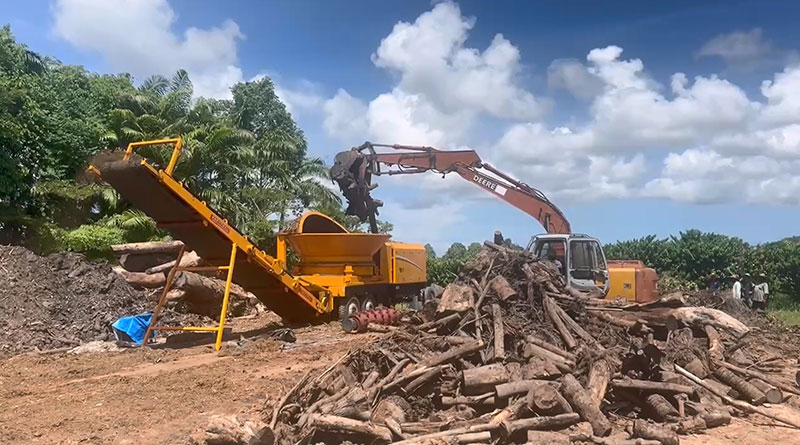
Tub grinder capacity for land-clearing roots should begin with the required accepted output per shift, then work backward through root preparation, contamination control, loader cycles, grinder utilization, and screen acceptance. A brochure production range cannot answer this question because root balls differ in geometry, retained soil, moisture, attached wood, and the amount of material rejected before grinding.
This buyer worksheet is designed for contractors, project owners, and procurement teams. It does not estimate a universal tons-per-hour figure. Instead, it creates a capacity envelope that a supplier can test against representative material.
Define the daily production obligation Write the tonnes or cubic volume that must leave the site as accepted product, the available shift hours, and the days allowed for the project. Separate raw incoming material from material that actually meets the outlet specification. Roots rejected for metal, stones, excessive soil, or oversize preparation are not accepted grinder output.
Use the site's existing wood grinder throughput test method to distinguish net grinding rate from gross shift rate. For purchasing, gross rate is normally the stronger planning number because it includes normal loader gaps, inspections, contamination stops, and discharge delays.
2. Build three root-feed scenarios Scenario | Material description | Capacity implication | Prepared | Cleaned roots within the agreed feed envelope, limited attached stem, controlled soil | Represents the easiest repeatable commercial stream | Normal | Typical mixture of root sizes, moisture, attached wood, and expected preparation | Primary sizing and budget scenario | Difficult | Large projections, high retained soil, awkward shapes, or more rejects | Tests delay, wear, cleaning, and contingency requirements |
Photograph and measure enough loads to estimate the share of each scenario. The previous buyer guide for land-clearing roots explains how to define the feed envelope; this article turns that feed record into a capacity plan.
3. Calculate required gross rate Use a transparent planning equation:
Required gross accepted-output rate = required accepted output / available processing hours
If the site needs 500 accepted tonnes over ten 8-hour shifts, the planning requirement is 6.25 accepted tonnes per gross hour. This is only an arithmetic example, not a machine claim. Add separately documented contingency for weather, relocation, planned service, and variability; do not hide all uncertainty inside one unexplained percentage.
Then calculate productive utilization:
Utilization = productive grinding minutes / total elapsed processing minutes
A machine can show a strong net rate yet miss the project target when loader, preparation, or discharge delays reduce utilization. Ask each supplier to state which utilization and feed assumptions support its proposed configuration.
4. Treat preparation as part of capacity Root shaking, spreading, cutting, sorting, metal checks, and quarantine consume equipment and labor. Record the excavator or loader used, minutes per load, reject fraction, and the surface on which material is prepared. If preparation cannot keep an approved feed queue ahead of the grinder, the grinder will wait.
• Measure roots in three dimensions, including protrusions and attached stems. • Record visible soil and stone condition after the approved cleaning step. • Separate root balls from long logs and brush where their feeding methods differ. • Keep suspect metal or unknown material in a marked quarantine area. • Include rehandling and rejected material in the project cost.
5. Size the loader and feed queue Capacity is a system property. Record average loader cycle time from approved feed pile to safe presentation, average charge size using a consistent mass or volume method, and the number of cycles per observation period. Observe whether the loader must stop to turn pieces, remove contamination, or clear traffic. A larger grinder does not solve a slow or unsafe material route.
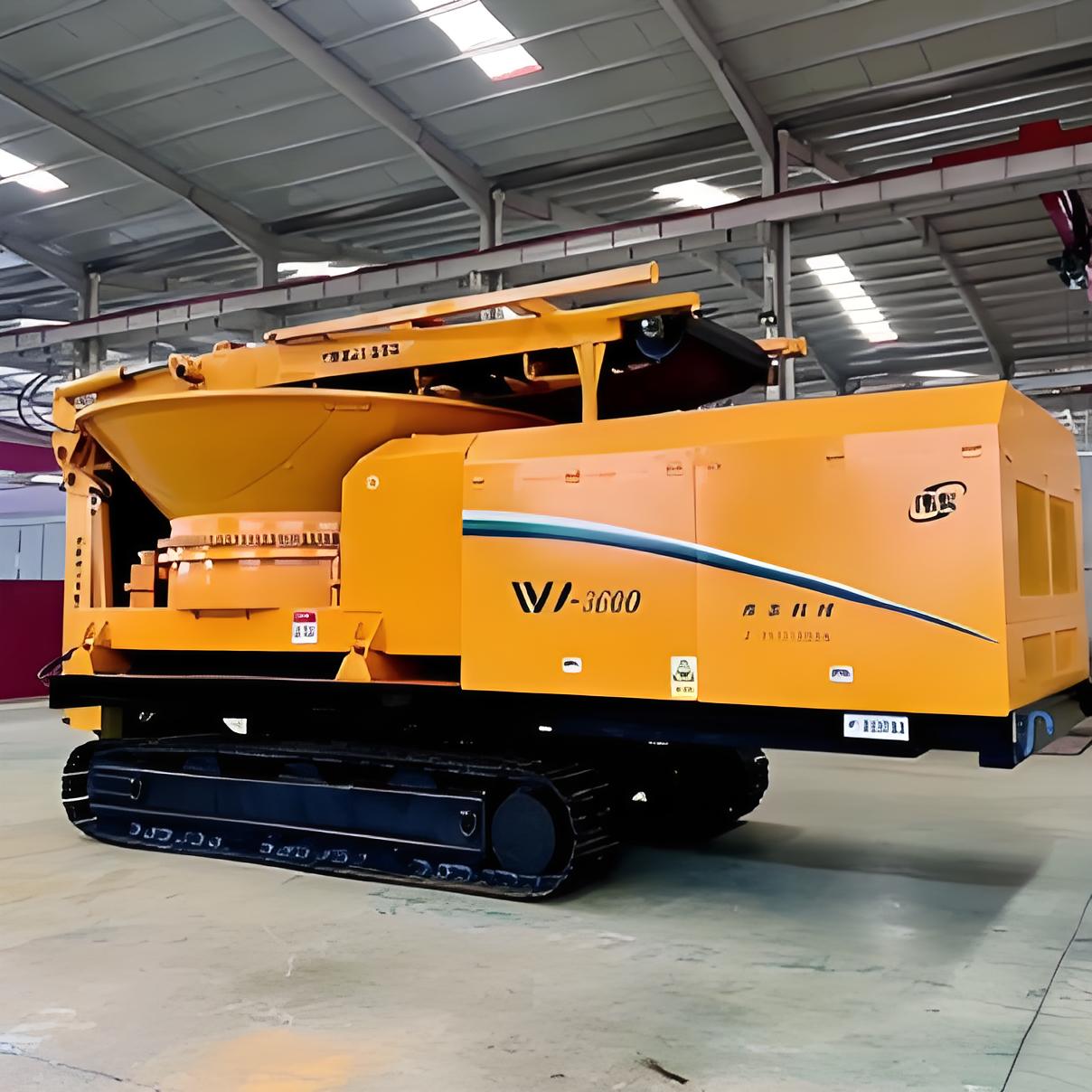
Review the tub grinder product range as a configuration starting point. The selected model, screen, wear condition, discharge, and loader must be documented together in the trial record.
6. Define accepted output before testing State the intended outlet: mulch feedstock, compost structure, biomass preparation, or volume reduction. Write the particle-size method, oversize and fines limits, moisture basis, visible contamination rule, and whether a second pass is allowed. Soil carried by roots can affect ash and downstream acceptance. U.S. Forest Service research on air quality and biomass harvesting operations reports examples where land-clearing and stump material contributed to high ash, supporting the need for project-specific sampling.
7. Run a representative capacity trial • Prepare identified batches for prepared, normal, and difficult roots. • Fix the machine, screen, wear condition, loader, operator, and discharge setup. • Measure input and accepted output consistently. • Record productive time and every delay category. • Sample output at the beginning, middle, and end of each run. • Report net rate, gross rate, utilization, rejects, oversize, and reprocessing. • Repeat any comparison with only one major variable changed.
Never accelerate feeding beyond the approved method to reach a target number. A blockage, inspection, or maintenance task requires the machine-specific energy-isolation procedure and trained authorized personnel.
8. Compare supplier proposals on one sheet Field | Supplier response | Buyer evidence | Accepted feed envelope | Dimensions, contamination, preparation, exclusions | Representative root file | Trial configuration | Machine, screen, wear condition, loader, discharge | Signed test record | Capacity basis | Net and gross accepted output, utilization | Measured runs and samples | Support scope | Training, commissioning, parts, evidence required | Order and service documents |
For an engineering view of how root characteristics change the test, read the related root-feed characteristics guide. Send root photos, dimensions, contamination observations, required accepted output, shift plan, loader details, and outlet specification through the WDMachines inquiry page. The useful capacity answer is a tested envelope with assumptions, not an isolated peak figure.
Keep the worksheet with the purchase file so later operating results can be compared with the original assumptions and corrective actions can be traced.
Related engineering resources
Wood grinder throughput site test
Land-clearing roots buyer guide
Root-feed characteristics test guide
Contact WDMachines engineering