Welcome to Weidong Machines
How to Choose a Tub Grinder for Palm EFB: A 7-Input Decision Worksheet
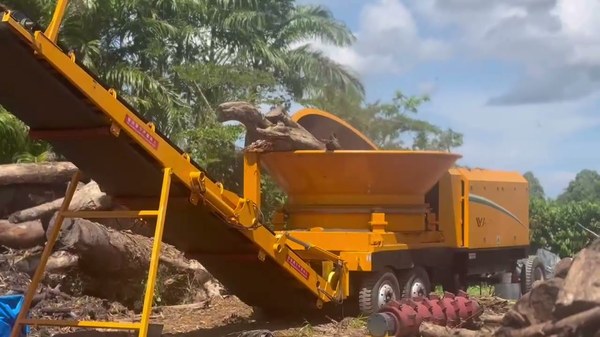
To choose a tub grinder for palm EFB, do not start with an advertised tons-per-hour figure. Start with seven project inputs: the exact palm residue mix, measured moisture condition, incoming dimensions, required output, contamination, loading method, and the next process after grinding. A tub grinder can be a practical candidate when loose or bulky EFB can be loaded consistently and the screen, rotor, discharge, and operating plan are tested with representative material. If long wet fibers bridge, wrap, or blind the screen, a horizontal grinder, pre-shredder, drying step, or two-stage line may be the better answer.
First confirm that “palm EFB” is really the material
Empty fruit bunches are not the same feedstock as oil-palm trunks, fronds, kernel shells, or mixed plantation clearing waste. They can arrive as whole bunch structures, loosened fibers, weathered piles, or material already cut by another machine. A quotation that says only “palm waste” leaves the most important engineering question unanswered.
Separate the proposed feed into percentage ranges by visual volume: whole EFB, loose fiber, fronds, trunk sections, soil-bearing roots, and non-palm contamination. Take photographs beside a known scale and record the largest representative piece rather than only the average. The existing tub grinder versus horizontal grinder comparison for palm waste explains the two feeding concepts; this guide adds the measurements needed before choosing either one.
Use a seven-input decision worksheet
| Input | What to record | Why it changes the decision |
|---|---|---|
| Material mix | Approximate shares of whole EFB, loose fiber, fronds, trunks, and foreign material | Different shapes enter, bridge, and reduce differently |
| Moisture condition | Multiple measured samples, collection time, storage history, and rain exposure | Wet fibrous material can change feeding and screen discharge |
| Incoming size | Typical and maximum length, width, thickness, and bunch condition | Determines whether pre-cutting or controlled feed is needed |
| Required output | Target use and acceptable size range, including oversize policy | Final use determines screen and possible second-stage processing |
| Contamination | Soil, stones, wire, metal, bags, and other non-feedstock items | Affects safety, wear, inspection, and rejection procedures |
| Loading method | Loader or excavator model, attachment, bucket/grapple volume, cycle path, and operator visibility | The grinder cannot maintain output when feeding is irregular or unsafe |
| Downstream process | Conveyor, pile, screening, drying, boiler, composting, densification, or transport | The downstream step may set the practical output rate and particle requirement |
Do not fill the worksheet with supplier assumptions. Use site measurements or label the value as unknown. An unknown input is not a reason to select a larger machine; it is a reason to arrange a representative material test.
Measure moisture as a range, not a single description
Oil-palm EFB is a lignocellulosic, fibrous residue and can retain substantial water after mill processing or outdoor storage. Published research often prepares EFB by drying and mechanical size reduction before downstream laboratory or biological processes, which demonstrates that material condition is part of the process design rather than a minor detail. For example, one recent study dried EFB before grinding it to a specified size for methane-production experiments.
For machine selection, collect samples from the outside, center, top, and lower portion of the pile. Use the same documented measurement method for every sample. Record the range and median, together with recent weather and pile age. Do not promise that a machine will handle a particular percentage merely because another project reported it. Water distribution, fiber length, screen opening, feed consistency, and the desired output all interact.
Decide whether the feed presentation suits a tub
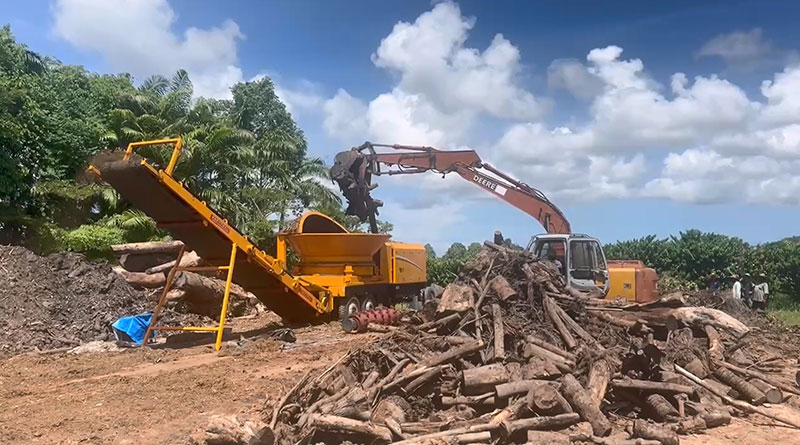
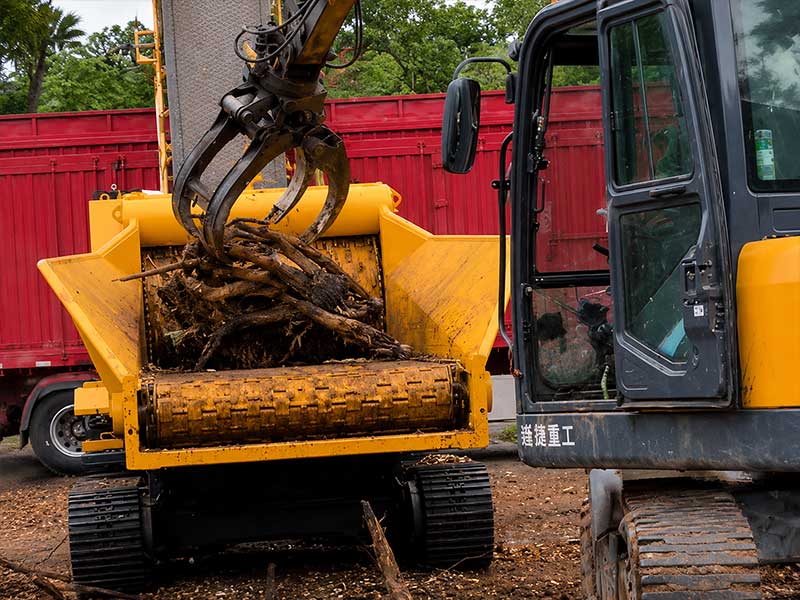
A tub grinder accepts material from above into a rotating tub and grinding chamber. That layout can suit bulky, irregular material when a loader can place manageable loads and the tub action presents material consistently. The question is not whether EFB can enter the opening. The question is whether the full cycle—loading, presentation, reduction, screen passage, and discharge—remains stable with the actual fiber condition.
During a trial, watch for bridging above the grinding zone, long fibers circulating without reducing, material wrapping around rotating components, uneven power demand, screen blinding, and discharge buildup. Record the event and the feed condition instead of treating every interruption as an operator error. If these behaviors remain after reasonable screen, feed-rate, and preparation adjustments approved by the supplier, compare a controlled-feed horizontal configuration or a pre-shredding step.
Start with the end product
“Smaller EFB” is not a useful product specification. State whether the output will be used for compost preparation, fuel preparation, drying, densification, fiber recovery, transport-volume reduction, or another process. Record the acceptable size band, maximum oversize, fiber-form requirement, moisture limit for the next step, and whether screening or regrinding is allowed.
A smaller screen does not automatically create a better project. It can increase residence time and may make wet fibrous discharge more difficult. A coarse first pass followed by drying, screening, or secondary reduction may be more controllable than demanding final size in one step. The palm-oil waste processing overview introduces possible material pathways, but the buyer should verify the acceptance specification of the intended downstream user.
Test the loader and grinder as one system
Machine output is often quoted as if the grinder operates alone. On site, the loader must pick up stringy material, travel safely, place each load, and avoid overfeeding. Use the actual planned attachment during the test. Time at least ten representative cycles and record empty travel, bucket filling, loaded travel, positioning, unloading, and waiting separately.
Compare delivered feed with grinder consumption using measured weights whenever possible. The wood grinder throughput site-test method provides a practical framework for defining accepted feed, saleable output, operating time, and delays. Do not convert loose bucket volume directly into mass without a representative bulk-density measurement.
Include contamination and cleaning in the purchase decision
EFB handled on yards or plantations may collect soil, stones, wire, metal, or mixed waste. Define receiving, approved-feed, and quarantine areas before the machine trial. Record what is removed from each sample load. Ask the supplier which inspection, protection, detection, and rejection procedures apply to the proposed configuration.
Contamination changes more than wear cost. It can create projectile hazards, unplanned stoppages, screen damage, unsuitable finished material, and unsafe manual intervention. Never rely on a magnet or downstream separator as the only receiving control, and never enter an unstable pile or operating machine to remove a blockage.
Run a representative EFB test before accepting a capacity claim
A useful test uses material from the planned source, not a clean demonstration pile selected for easy processing. Agree in writing on the sample description, measurement boundaries, screen or cutting setup, loading equipment, test duration, accepted output definition, and how delays will be classified. Weigh input or accepted output over a documented period and report both gross and net operating time.
The result applies to the tested conditions. It is not a guarantee for wetter piles, longer fibers, a smaller screen, different contamination, or a slower loader. The regional palm grinder selection guide for plantation operations offers additional questions about mobility, service access, and plantation workflow.
Compare cost by tested output, not engine size
Build the commercial comparison around the cost of accepted output under the tested condition. Record fuel or electricity, loader and operator time, preparation labor, wear inspection, rejected material, oversize handling, downstream waiting, and transport. Keep purchase price separate from operating evidence. A low initial quotation can be expensive if the process needs repeated rehandling, while a larger machine can also be wasteful when the loader or downstream line sets the limit.
Do not invent a universal cost per tonne. Divide the measured cost for the test period by the measured mass of accepted output, state every assumption, and run sensitivity cases for moisture, working hours, labor rate, wear allowance, and transport distance. This creates a comparison the procurement team can audit and update.
When a tub grinder is a reasonable candidate
The actual EFB mix and maximum feed dimensions are documented.
The loader can safely deliver repeatable loads into the tub.
A representative trial shows stable presentation, reduction, and discharge.
The tested screen and output meet the next process requirement.
Contamination controls and safe blockage procedures are defined.
Downstream conveying, piling, screening, or drying can keep pace.
The supplier identifies configuration limits and service items without relying on an unqualified capacity number.
When to compare another process
Compare a horizontal grinder, slow-speed pre-shredder, cutter, drying step, or two-stage line when long fibers repeatedly bridge or wrap, when whole material cannot be presented safely, when a controlled infeed is essential, or when the final specification requires preparation that one pass cannot reliably provide. The broader palm waste and palm trunk grinding guide helps separate EFB from the other plantation residues that may need different handling.
Information to send before requesting a configuration
Photographs and video of the actual feedstock beside a known scale.
Material mix percentages and maximum incoming dimensions.
Measured moisture samples and storage history.
Contamination examples and receiving controls.
Required output use, size band, and allowable oversize.
Planned loader or excavator and attachment details.
Site layout, power or fuel constraints, mobility needs, and downstream equipment.
Required operating hours and the method proposed for a material test.
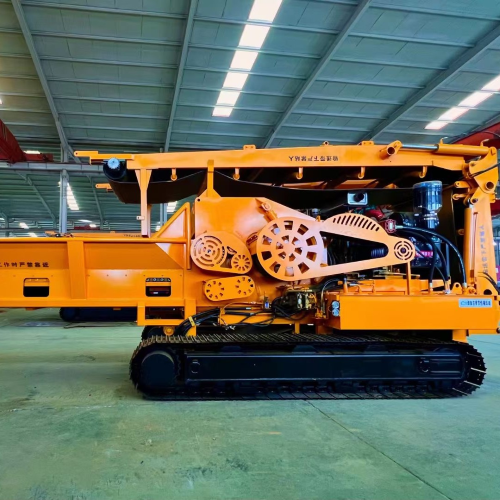
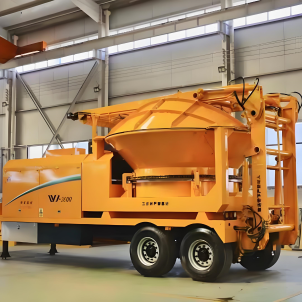
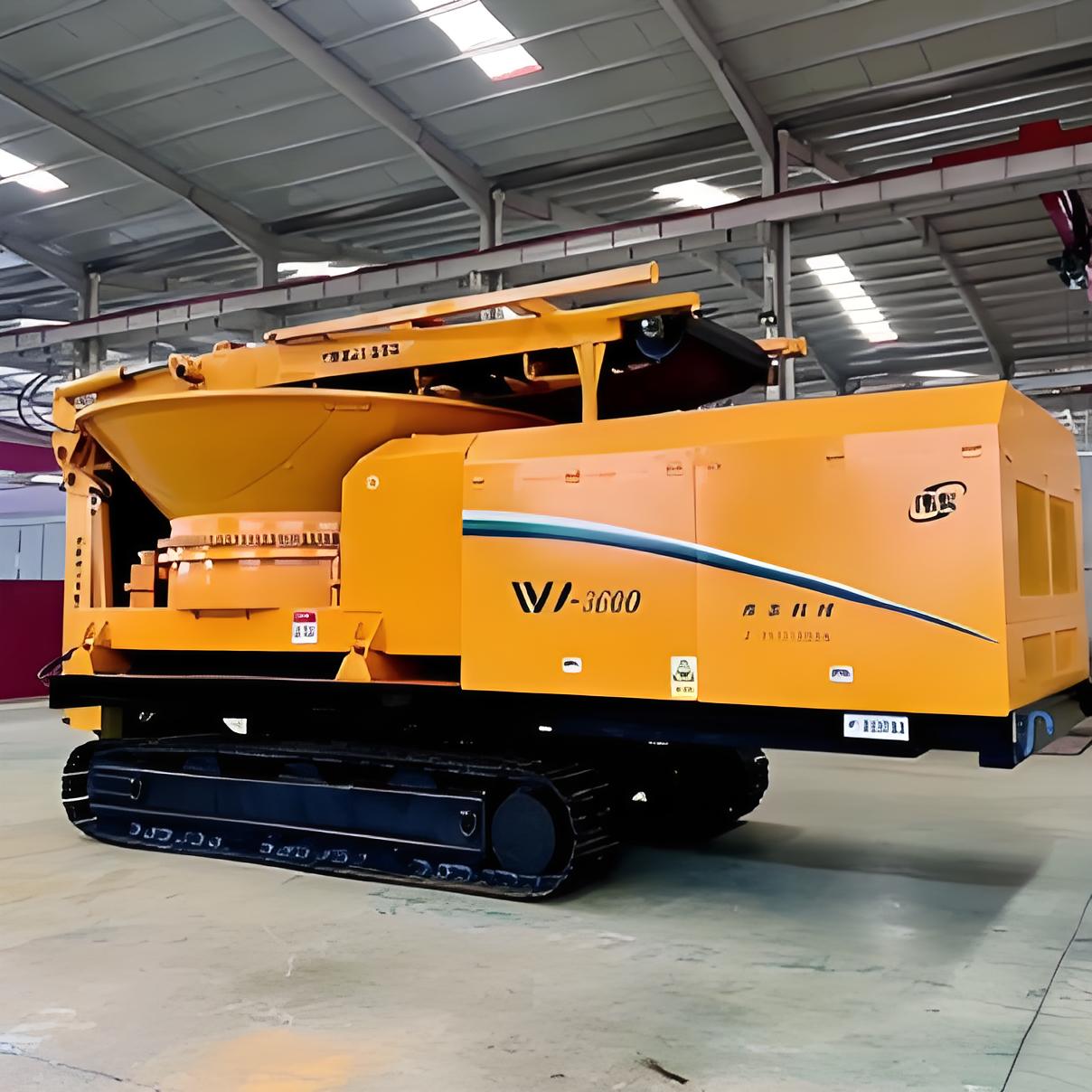
Use the WD Machines tub grinder section to review the equipment category, then send the worksheet with representative EFB evidence for an engineering discussion. Selection should follow the material test and process requirement—not the other way around.