Welcome to Weidong Machines
Tub Grinder Cost for Land-Clearing Roots: Budget and ROI Factors
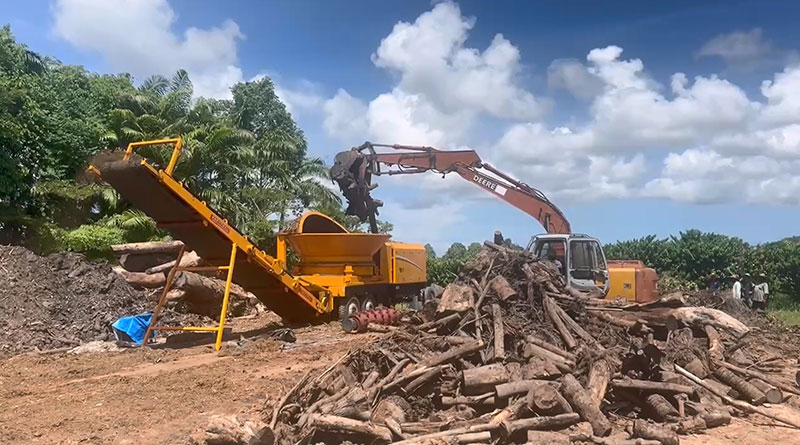
Tub grinder cost for land-clearing roots: Tub grinder cost for land-clearing roots is a project-system calculation, not a machine-price comparison. A defensible budget includes preparation, loaders, fuel or electricity, wear parts, transport, labor, downtime, product acceptance, and the value or disposal cost of the finished stream. This buyer worksheet shows what to request before comparing proposals; every rate and service-life assumption must be verified against representative roots.
Start with the commercial boundary
Define the tonnes or cubic metres arriving from clearing, the accepted product required, the operating window, and the final destination. Separate roots from logs, brush, soil, stones, wire, and prohibited debris. The earlier land-clearing root buyer guide provides the feed-envelope questions. A quotation that assumes clean wood should not be compared with a project containing soil-bearing root balls unless the preparation difference is priced.
State whether the project objective is volume reduction, mulch feedstock, compost structure, or biomass preparation. Product specifications can change screen choice, reprocessing, handling, and revenue. Record the moisture and contamination basis used for every mass figure so wet soil is not counted as useful wood.
Build a total installed cost sheet
Place purchase price, freight, duties, site access, unloading, commissioning, training, initial screens and wear parts, fire and dust controls, and any power or fuel infrastructure on one sheet. Review the tub grinder range only after the site boundary is written. A lower equipment price can create a higher installed cost when another loader, extra preparation, or repeated relocation is required.
Ask suppliers to label inclusions, exclusions, currency, tax basis, delivery assumptions, and quotation validity. Do not turn an unknown into a zero. Use a range for uncertain civil work, ground improvement, water supply, lighting, traffic control, or storage.
Calculate cost per accepted tonne
Use cost per accepted tonne = total project-period cost / accepted output. Accepted output means material that meets the written outlet rule, not everything crossing the discharge conveyor. Report input, rejects, oversize, reprocessing, and accepted product separately. The site's throughput test method explains why gross elapsed time matters.
Create prepared, normal, and difficult root scenarios. For each scenario record productive minutes, loader gaps, preparation time, contamination stops, discharge delays, service time, and accepted output. Keep the supplier's demonstrated numbers separate from planning estimates.
Price preparation and contamination
Root shaking, spreading, cutting, sorting, metal checks, and quarantine may consume an excavator and operator before grinding begins. Measure minutes and reject volume for representative loads. U.S. Forest Service research on biomass harvesting operations discusses ash associated with soil contact and land-clearing material, which supports treating cleanliness as an economic variable rather than a cosmetic issue.
Price the dirty-to-clean route: receiving surface, drainage, inspection, preparation, approved feed queue, and reject removal. If cleaning improves outlet acceptance or wear, show that benefit separately instead of hiding preparation inside grinder productivity.
Turn wear into a controlled allowance
List hammers or tips, screens, fasteners, belts, bearings, conveyor components, filters, and fluids relevant to the offered configuration. Ask for inspection criteria, change limits, quantities per set, parts price, expected labor, and the material evidence supporting any life estimate. A wear-life claim from clean green waste is not automatically transferable to roots carrying grit.
Use low, expected, and high wear cases. Include planned inspection labor and the production consequence of an unplanned change. The companion tub grinder operating-cost article helps organize recurring cost categories, but the root trial must supply the project inputs.
Model utilization, mobility, and support
Gross utilization includes setup, approved relocation, loader supply, discharge clearing, routine checks, and ordinary stops. A mobile unit may reduce hauling but add move and setup time; a fixed work cell may simplify flow but require material transport. Compare both options over the actual site sequence.
Add scheduled service, response time, parts lead time, remote support, travel, and substitute-equipment assumptions. Record who carries the risk for site delays, unsuitable feed, weather, and product rejection. A transparent support allowance is more useful than an unsupported uptime promise.
Test the ROI claim
Calculate cash flow under at least three accepted-output and cost scenarios. Keep potential product revenue separate from avoided hauling or disposal. Verify local gate fees, fuel, labor, transport, and product price; these are project inputs, not universal machine facts. Report the break-even point as a range and show which assumptions move it most.
Stress-test lower utilization, higher wear, more rejects, and delayed commissioning. If the return disappears after one reasonable change, the project needs more evidence before purchase. Send the assumptions through the WDMachines contact page with root photographs, dimensions, contamination observations, outlet rule, and shift plan.
Build a representative baseline before forecasting
The team responsible for tub grinder cost for land-clearing roots should select several identified root lots that represent the expected project, not just the easiest material available on the trial day. For every lot, preserve photographs, dimensions, attached-wood observations, visible soil and stone condition, moisture method, preparation, rejects, loader and machine configuration, screen identity, component condition, operator, productive minutes, total elapsed minutes, accepted output, and sample results. Repeat the baseline when the season, clearing area, storage surface, or outlet changes. This record makes the cost model traceable and prevents a later estimate from combining unlike roots without explanation.
Separate observed values, supplier statements, quotations, and planning assumptions in the worksheet. Give each assumption an owner, evidence source, date, expected range, and trigger for review. Currency, tax, freight, labor burden, fuel or electricity, product value, disposal charges, and parts lead time are local commercial inputs and should be updated from current documents. Do not convert missing data into zero cost. Where direct measurement is unavailable, show a low, expected, and high case and identify which site trial or quotation would narrow the range.
Use change control during the project
Issue a revision whenever the root class, preparation standard, loader, machine configuration, screen, wear condition, discharge arrangement, work cell, shift pattern, outlet specification, or support scope changes. Record the effective time so cost and output data can be assigned to the correct operating window. Compare the new window with a repeated baseline instead of attributing every difference to one visible change. A daily review should reconcile incoming material, rejects, accepted output, operating hours, delay codes, energy or fuel, parts consumption, labor, samples, and abnormal events.
At project close, compare the original estimate with the measured result and explain variance by category. Preserve useful evidence for the next proposal, but do not transfer the final rate to a new site without checking its material, layout, output, and commercial assumptions. This feedback loop improves future budgets while keeping every published number tied to a defined project boundary.
Buyer handover record
Require one signed worksheet containing the feed envelope, configuration, installed scope, preparation method, trial results, accepted-output rule, wear assumptions, service scope, exclusions, and three cost scenarios. For an engineering comparison of root wear, consult the matrix root feed-characteristics guide. The useful purchasing decision is a tested cost envelope with named risks, not a single optimistic cost-per-tonne number.