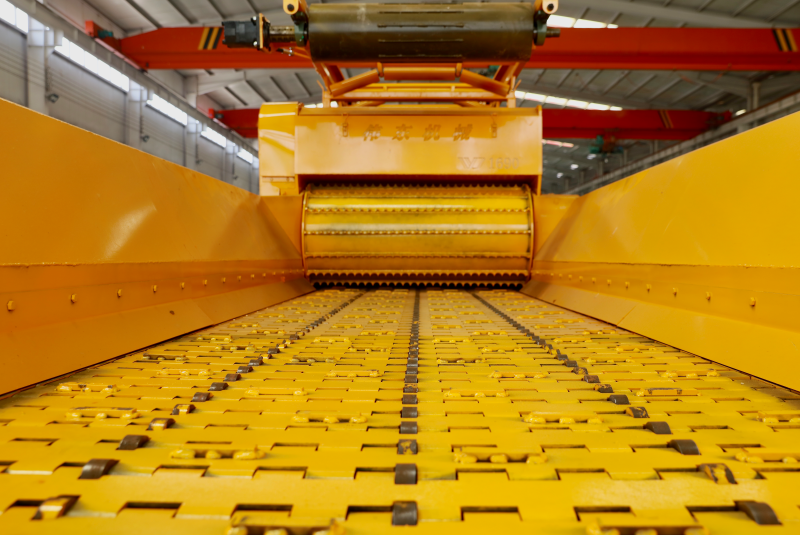
Welcome to Weidong Machines
Tub Grinder Maintenance for Organic Fertilizer: Wear and Downtime Checklist
Tub grinder maintenance for organic fertilizer feed begins with a defined material duty and a safe stop procedure. The machine prepares a woody ingredient for a downstream compost process, so damage, contamination and unplanned downtime affect both equipment availability and the receiving schedule. This checklist organizes observations before, during and after a campaign. Use the delivered machine manual and site isolation rules for actual service tasks; the questions below are planning controls, not replacement intervals or permission to enter hazardous areas.
Record the feed condition before judging wear
Log the source, date, approximate size range, moisture condition and visible soil or foreign material for each lot. Distinguish clean branches from root-rich or mixed cleanup material. A sudden change in wear or vibration is difficult to interpret when the feed history is missing. Reject metal, stone, plastics and treated wood under the receiving rule before they reach the tub. Keep the rejected load identifiable. The organic fertilizer workflow guide places this acceptance step ahead of grinding and keeps the output traceable.
Make a pre-start walkaround repeatable
Assign one trained person to confirm guards, access panels, fluid leaks, loose components, warning devices, discharge path and housekeeping before the shift. Check that no one is within exclusion zones and that the loader route is clear. Record what was inspected and what required correction; an unsigned generic tick box gives little evidence after a stoppage. Follow the exact model manual for checks, lubrication, tension and fluid levels. If a guard or safety function is not fit for use, hold the machine and escalate. Do not attempt an improvised repair solely to preserve the daily throughput target.
Observe feed and discharge while running
Operators should note unusually uneven feeding, repeated stalls, changes in sound, vibration, temperature indicators or material backing up at discharge. Record the material lot and time when the change began. A blocked conveyor can look like low grinder capacity unless the complete flow is observed. Keep people clear of moving equipment and use the site stop and isolation process before investigation. Capture photographs only from a safe position. The purpose of the running log is to show a trend early enough for planned attention, rather than to diagnose a fault by guesswork.
Inspect wear against defined criteria
Ask the supplier for the delivered model’s rotor, hammer or tooth, screen, liner and conveyor inspection points, measurement method and replacement limits. Record baseline photographs at commissioning and use consistent angles on later checks. Separate normal consumable wear from impact damage caused by contamination. Track part number, operating hours, material mix and reason for replacement; do not invent a universal hours-to-failure figure. A used component may be serviceable under the manufacturer’s criterion even if it looks worn, while a damaged component may require action long before an expected interval.
Plan access, tools and parts before a stop
List the isolation steps, lifting equipment, workspace, lighting, tools, qualified personnel and replacement parts needed for each planned task. Confirm that the yard layout allows service vehicles and safe handling of heavy components. A part in a distant warehouse is not the same as a part available during the planned shutdown. Agree with the supplier which items are stocked locally, which are ordered as needed and who approves an emergency shipment. Compare the actual service pack with the tub grinder configuration in the purchase record so the stocked items fit the delivered machine.
Separate planned and unplanned downtime
Use one log for planned inspection, cleaning and part changes, and another for faults or feed-related interruptions. For every stop, record start and end time, cause category, affected lot, work performed and restart authorization. Avoid counting a loader delay or lack of accepted-feed storage as a machine failure. The distinction matters when comparing a new configuration, a service agreement or a different yard arrangement. The capacity planning worksheet explains why total elapsed hours and accepted output are better planning measures than active grinding rate alone.
Protect the receiving specification after maintenance
When screens, teeth, settings or feed sources change, sample the next output and compare it with the compost operation’s particle and contamination rules. Hold the material if acceptance is uncertain. Oversize returned for another pass consumes machine time and should not be counted as new throughput. Label stockpiles so a suspect lot can be isolated without stopping every delivery. Maintenance may restore the machine mechanically but still change product shape or size; the receiver should release the woody ingredient against its own criteria.
Review supplier response and training
Document the contact channel, diagnostic information required, remote support scope, technician access, travel assumptions and exclusions. Ask for written response commitments rather than inferring them from a general warranty statement. Train operators on normal checks, safe stopping, reporting and the boundary between their role and qualified service work. A horizontal wood grinder comparison may be useful when feed geometry or loading changes, but compare its maintenance access and accepted product on the same project basis. Keep the training record with the machine identification and latest manuals.
Close each campaign with evidence
At the end of a lot or campaign, summarize eligible input, accepted output, planned downtime, unplanned stops, wear findings and outstanding corrective work. Review changes with the supplier and the compost receiver before the next material source arrives. Use the WDMachines contact page to send model details, feed photographs and a specific service question. Do not publish unsupported lifetime or downtime guarantees from a small sample. The useful maintenance record is one that shows what happened, what was checked and why the next operating decision is justified.